



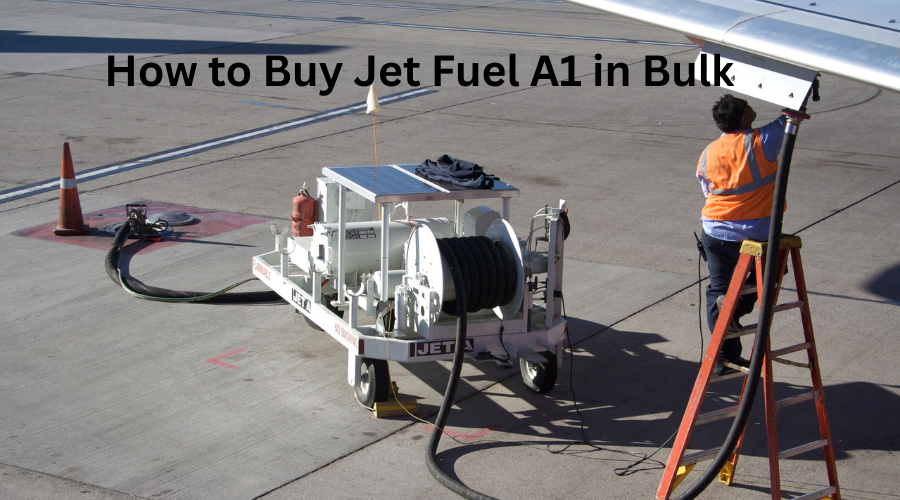
A bulk purchase of Jet Fuel A1 is not the same as ordering your office supplies. A lot of paperwork, certifications, quality checks, and a chain of custody come in between each liter's turnover. If you are an airline, the fuel distributor, or a business involved in aviation operations, this process is important. This guide covers what jet A1 is, the typical purchasing process, and the pitfalls to be aware of when procuring jet A1.
Jet A1 is made from kerosene and is mostly used in commercial and military aviation. It is the normal fuel used worldwide, except in North America where Jet A is used. The two are similar, but A1 has a lower freezing point and is therefore better suited for long international flights at high altitudes.
Jet A1 is extensively purified and tested before its use in an aircraft. They have strict standards for this fuel for a reason: it can be dangerous even with a small amount of contamination.
The temperature decreases rapidly at cruising altitude and may often get below -40°C. Jet A1 is specially made to maintain its liquid state. A higher-freezing-point fuel increases the risk of becoming gelled in flight, which isn't something anyone wants at 35,000 ft!
There are generally several types of bulk Jet A1 buyers. The major airlines and freight shippers are the largest buyers, purchasing large loads regularly. Private jets and charter companies are also bulk buyers, but generally in smaller quantities than the commercial airlines.
Another big volume of purchasers are fuel distributors and airport fuel farms. They supply and re-sell fuel to other companies that are not large enough to purchase the product directly from the refinery.
Jet fuel is also purchased in large quantities by each of the military branches, as well as government agencies, with varying security and delivery demands.
It is not a simple one-click operation to purchase the product in bulk. It typically takes multiple steps, and if any of these steps is missed, there might be delays in the process, non-compliance, and, unfortunately, worse.
Buyers must have the proper safety systems, handling equipment, and storage tanks before contacting suppliers. Jet fuel needs to be stored under certain conditions to prevent contaminants from being present, and most fuel suppliers will ask about that beforehand.
Contact some companies who are in the business of aviation gas, not fuel distributors. Certification of aviation fuel suppliers is against industry standards, such as ASTM or Defence Standards, depending on the region.
A certificate of analysis should accompany each batch of the Jet A1. This document verifies that the fuel has the necessary fuel specifications such as water content, sulfur content, freezing point, etc. This is always an important step, even with trusted suppliers.
Jet fuel requires special tankers and handlers. Delivery times need to be safe for large orders and in particular for aviation fuel where demand is seasonal and can affect supply chains.
It's good practice to sample incoming fuel regardless of any documentation. This will trap contamination that may have occurred during transit.
Ensure that effective conductivity is in accordance with ASTM D1655 or Defense Standard 91-091 as appropriate to the geographical location. Such tests prove the fuel is up to the aviation industry’s stringent standards. If the supplier cannot provide this kind of documentation, then they are not a good supplier for bulk orders.
Price depends on orders, crude oil prices, and refining costs. The more items are ordered, the lower the price per item will be. Long-term contracts are also more likely to provide predictable, stable pricing than bulk purchases made as a single transaction.
Some of the drawbacks of purchasing in bulk are:
Some risks recur in bulk aviation fuel purchases, and by being aware of them up front, you can steer clear of expensive bad deals.
The primary threats to the chain are water contamination and particulate contamination. To prevent this from becoming critical, all tanks, pipelines, and tankers should be routinely cleaned and inspected.
However, some suppliers trade-off certification in order to provide cheaper services. This might save money today, but it could have serious safety and legal consequences down the road.” Don’t take a supplier’s word for certifications. Check them out yourself.
International oil markets can cause prices to rise and fall rapidly for jet fuel. For smaller operators who do not have long contracts, the cost can be volatile, and budgeting becomes challenging.
Fuel quality is protected by proper storage from the time of its arrival until it is used. Clean and well-maintained, tanks must be routinely checked for water accumulation or sediment deposits.
The temperature is also an important consideration, particularly in hot or cold climates. Routine testing should be considered to detect quality problems that do not affect an entire batch, particularly in high-volume facilities.
Fuel properties may change with storage even if the fuel is stored in good condition. Testing every few months helps detect early signs of degradation, particularly for long-term fuel that will not be used soon.
Buyers of aviation fuel need to have long-term supplier contracts, not just a single deal. A dependable supplier is aware of your delivery schedule, storage area, and order volume, making repeat orders easier over time.
It's also essential to partner with suppliers that can grow with you. Suppliers must be able to scale down to suit the volume without reducing fuel quality or delivery date for airlines or operators that are increasing routes or fleet size.
Effective and rapid communication is more crucial in this field than is expected. A responsive supplier minimizes the risk that documentation or delivery confirmation will disrupt the schedule due to delays.
Requirements for jet fuel differ from country to country, and global buyers must be aware of these variations. Things that are acceptable in one place may not be acceptable in another place.
Suppliers that know the cross-border regulations can help reduce delays at customs or during fuel transfers between countries. This is especially important for operators that work in multiple regulatory zones.
Performance and safety-enhancing additives are frequently added to Jet A1. Anti-icing additives are used to prevent fuel lines from icing up when aircraft fly at high altitudes. Static dissipater additives help to minimize static during fueling; it's already a crucial safety concern on the ground.
Depending on the vessel type and operating environment the buyer chooses, certain additive packages may be requested. Being flexible on this aspect may benefit operators with specific needs, but checking whether the additives affect fuel standards still applies.
Want to learn more? Check out our blog:
How to Source Jet Fuel A1: Complete Guide for Buyers, Traders & Suppliers (2026).
Purchasing Jet Fuel A1 in bulk requires more than just the best price. Fuel safety and consistency involve a variety of certifications, proper storage facilities, transport safety, and supplier reliability. From an airliner to a fuel provider to expanding charter businesses, the effort involved in vetting suppliers and acting responsibly pays off in both the short term and beyond. Properly doing things will prevent costly issues later on.
1- Where can I buy jet fuel A1 in bulk for retail use?
Ideally, bulk buying is best done from certified suppliers of aviation fuel who issue documents such as a certificate of analysis. Always check the product's certifications before ordering in bulk.
2- How to buy Jet Fuel A1 in wholesale at affordable rates?
Check the prices at a couple of reliable suppliers and look for reliability of supply arrangements. Bulk orders are likely to get better pricing due to the amount ordered and the regularity of the transactions.
3- Where can i found a Jet Fuel A1 supplier that can customize, where can I find?
Some suppliers are able to provide blended services, storage and delivery schedules tailored to the specific needs of the aircraft. It can be helpful to be upfront about this with suppliers from the start.
4- Is there any Jet Fuel A1 supplier who offers bulk supply with customization at low prices?
Yes, some suppliers offer pricing in bulk along with flexible delivery and storage. The best rates may be achieved by negotiating minimum order quantity and long-term contract discounts.
5- What is the frequency for the quality testing of stored Jet Fuel A1?
Stored jet fuel should be tested every few months, especially for long-term storage. Regular testing detects contamination or degradation in time before the whole batch becomes contaminated or degraded.
A bulk purchase of Jet Fuel A1 is not the same as ordering your office supplies. A lot of paperwork, certifications, quality checks, and a chain of...
READ FULLSourcing jet fuel A1 is not like any other kind of fuel. The aviation industry is a niche industry, and its protocols are different from others. Yo...
READ FULLJet fuel procurement is not like any other business deal. It is a completely different niche, which requires different processes and documents for ...
READ FULL